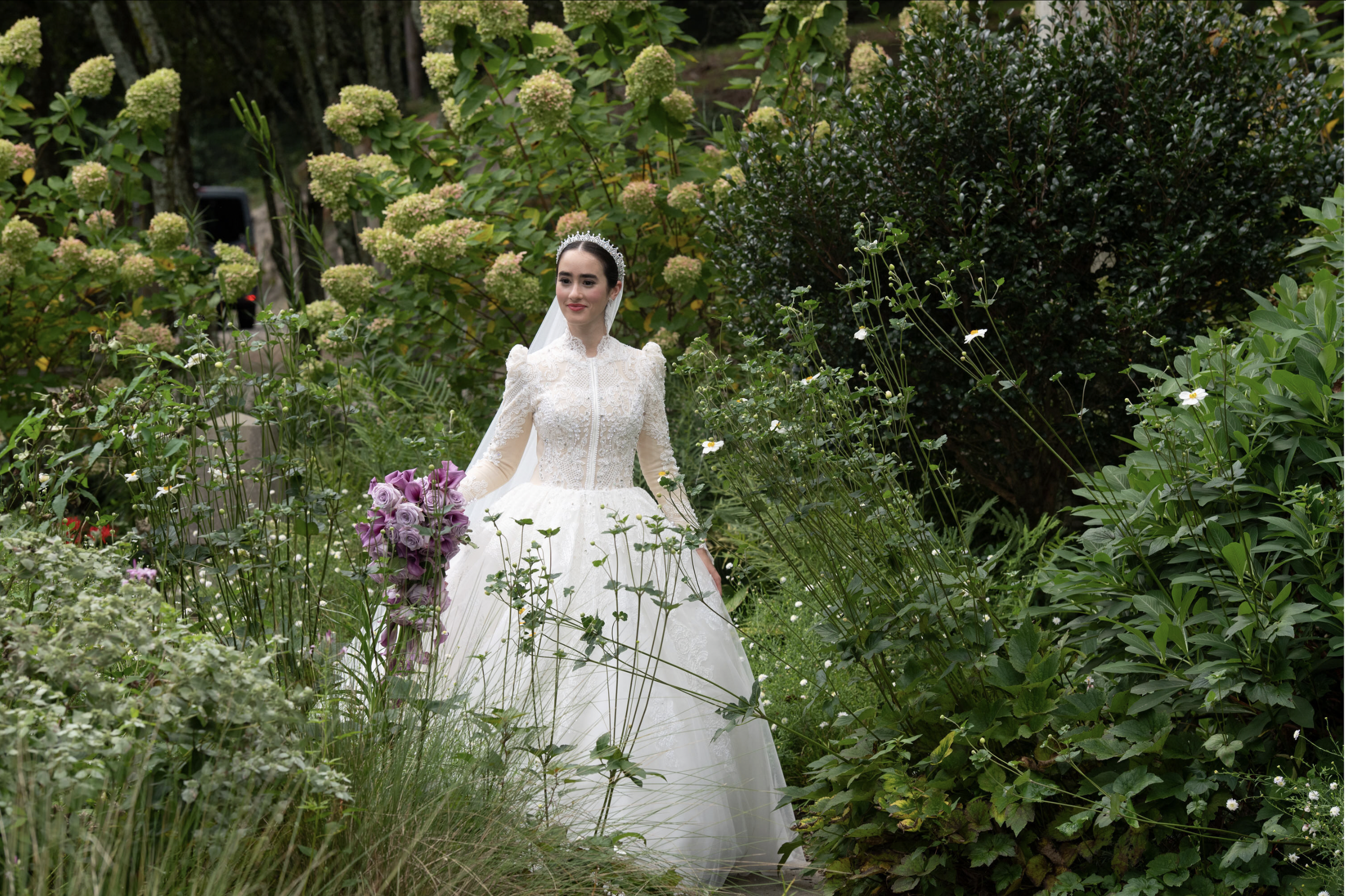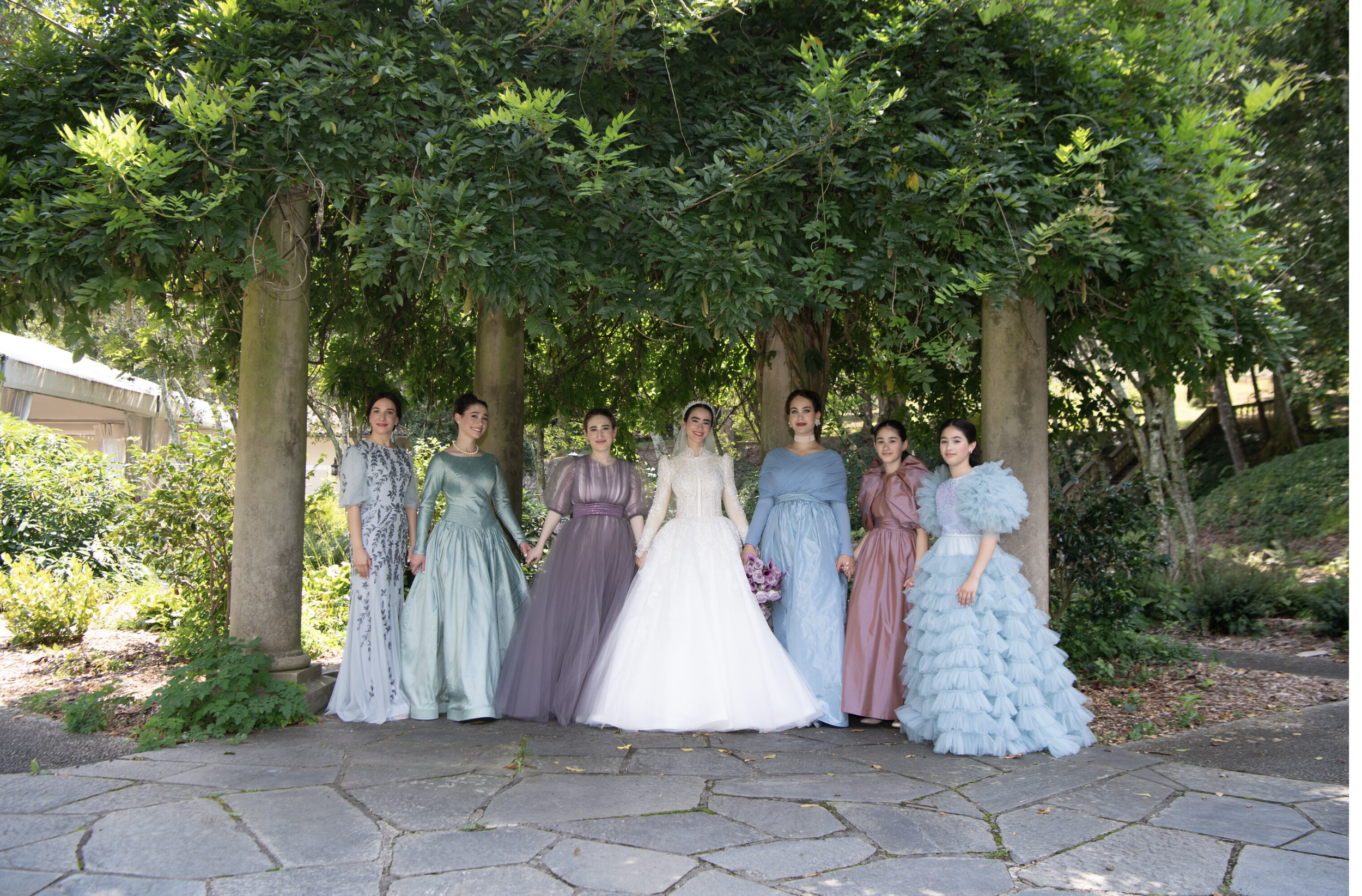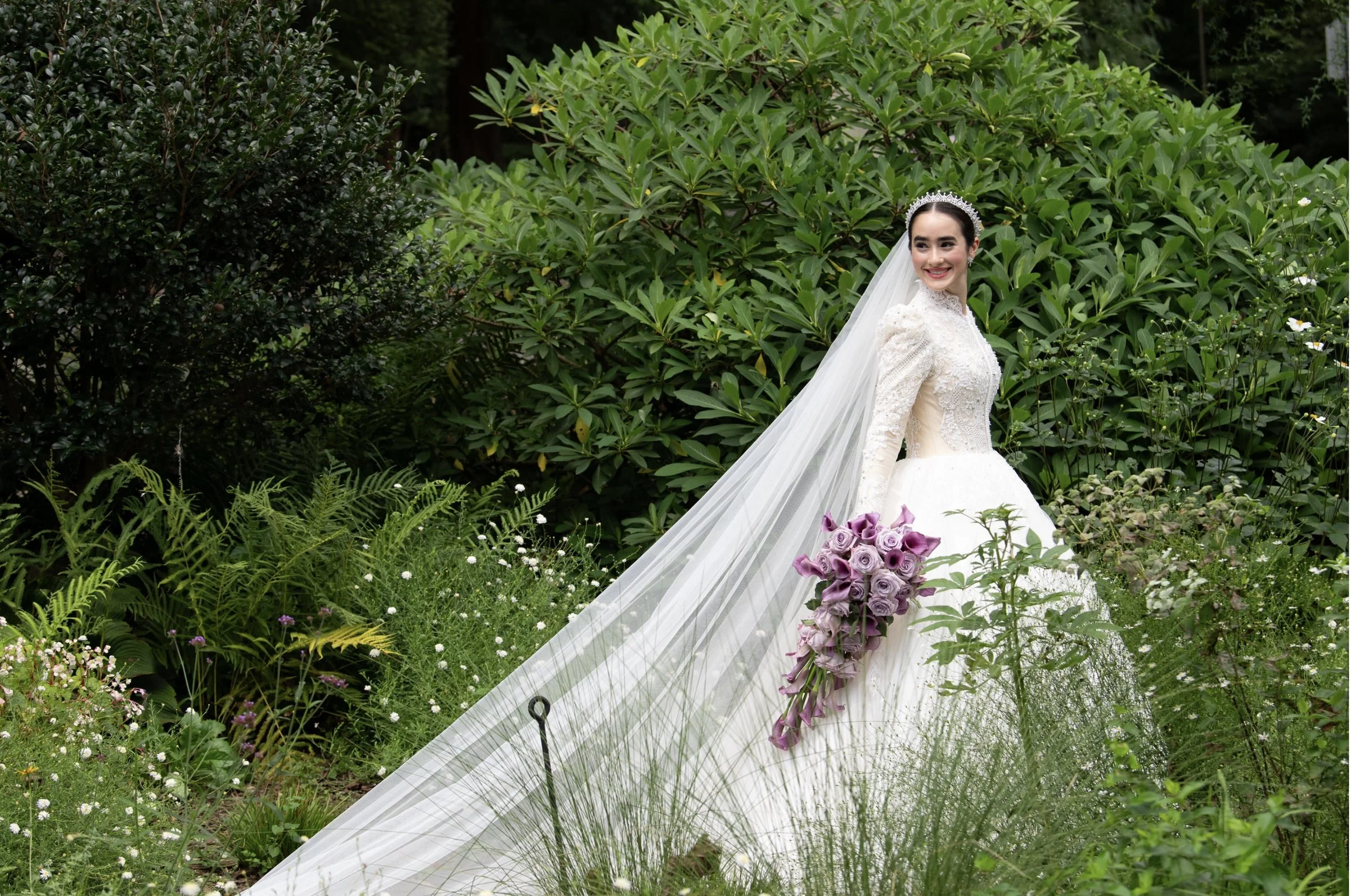
Come to my garden, my sister, my bride.
A field is where necessities are planted.
Wheat. Vegetables. Survival.
A garden is where we plant for pleasure.
This world, the mystics say, is not a field (or a jungle, despite evidence to the contrary). It is a garden. And we are the bride.
God did not need to create this world. He wanted to. Wanting comes from ta’anug—delight. Creation itself is an act of pleasure, an invitation into intimacy. Hashem desires closeness with us, not distance; relationship, not abstraction. A deep connection of love. Which is both comforting and, frankly, a lot of responsibility.
In its original state, the world was exactly that: a garden. Basi legani: “I have come into My garden” (Song of Songs, chapter 5) describes the world as it first was: a bridal chamber, Gan Eden, where the Shechinah, the Divine Presence, was openly revealed.
Then distance entered the story. Not because God left, but because His light, when filtered so far from its source, can feel like darkness. Deep darkness. The kind we recognize all too well right now.
The garden didn’t disappear.
It was concealed.
This is the core teaching of Basi L’Gani, the chassidic discourse studied each year in preparation for Yud Sh’vat, the tenth day of the month, marking the passing of the Previous Rebbe and, a year later, the beginning of the Lubavitcher Rebbe’s leadership. The Midrash describes creation as a place where God was fully at home, until human failure caused the Divine Presence to withdraw, level by level, into higher realms.
Think: I’ll be upstairs when you’re ready to talk.
The work, then, the whole project of being human, is not escape. It is return. To draw the Shechinah back down into the world. To take the raw material of physical life, this garden of unrealized potential, and through mitzvot, Torah, and attention, transform it into a sanctuary. A mikdash. Not somewhere else. Here. In the meat and potatoes.
When darkness is transformed into light—not bypassed, not denied, but worked with—it opens what the mystics call the “treasure houses.” These treasures are not simple rewards. They are the most essential, intimate Divine light, previously hidden, now drawn into the world.
The Lubavitcher Rebbe taught that while these treasures are often mediated through leaders and teachers, the end goal is far more radical: that the Divine light reach the rank-and-file soldiers. Ordinary people. Every individual. Armed not with brilliance, but with presence. (And possibly coffee.)
All of this, of course, is a metaphor.
A parable.
The Torah could have been a rule book. Instead, it is stories.
Here is mine.
I was listening to my favorite teacher, Rabbi YY Jacobson, who credited much of his class that day to Devori Nussbaum, whose book To Live With an Open Heart: Tanya Through the Eyes of a Psychotherapist had just been published. Everyone is talking about it. Rabbi YY is quoting it. Which is how you know it’s legit.
Layered over my admiration was regret.
Five years ago, Devori sent me her manuscript and asked for feedback. I read a few chapters and gushed, but beyond that, according to my own email history, it appears I ghosted her. That regret sat heavy. And beneath it, a quieter, sharper feeling: a small, petty pang of feeling like a loser.
Here she was, publishing a serious, academic, important book.
And here I was, writing (and publishing, soon please God)… stories.
Unacademic stories.
Personal stories.
A “dumb book,” my inner critic (who has excellent timing and no chill), whispered.
I sat with that stew of regret and comparison and didn’t think much more about it.
The next day, I continued a different class with Rabbi YY: class six on Basi L’Gani, the Rebbe’s annual restatement of what his leadership was about. Answering the question: What are we doing here at all?
And what do you know? That class was about storytelling.
About meshalim, parables: not as decoration, but as the deepest form of transmission. Stories don’t just convey information; they convey emotional intelligence. They meet the listener exactly where they are—intellectually, emotionally, developmentally— and invite them to co-create meaning.
In a parable, the storyteller doesn’t just teach. He gives over essence.
Facts alone cannot do that. Rules cannot do that. Only stories allow us to feel our history, inhabit it viscerally, and carry it forward. Jewish law is described as the straight light of God. But the stories, being cloaked, textured, and human, come from a higher source still.
Which explains why they’re messier. And harder to summarize at dinner parties.
In retrospect, this should have been obvious: the Torah didn’t survive for thousands of years because it was clear.
And there I was, suddenly, in my own come-to-my-garden moment.
It was as if Hashem were saying: You are working on something important—something that brings you pleasure. Everyone has a role. Some are academics. Some are invited into those rooms and sometimes miss their moment. That, too, is part of learning. And some are storytellers: inviting others into the garden, trusting them to make their own meaning. I realized then that God didn’t ask me to be smarter, just more honest, and willing to compost my own darkness.
As my kids would say: I love that for me.
“Come to my garden”: God meets us not in the abstract heavens, but in the dirt under our nails—where darkness feels like soil, and stories are how light is invited to grow.